
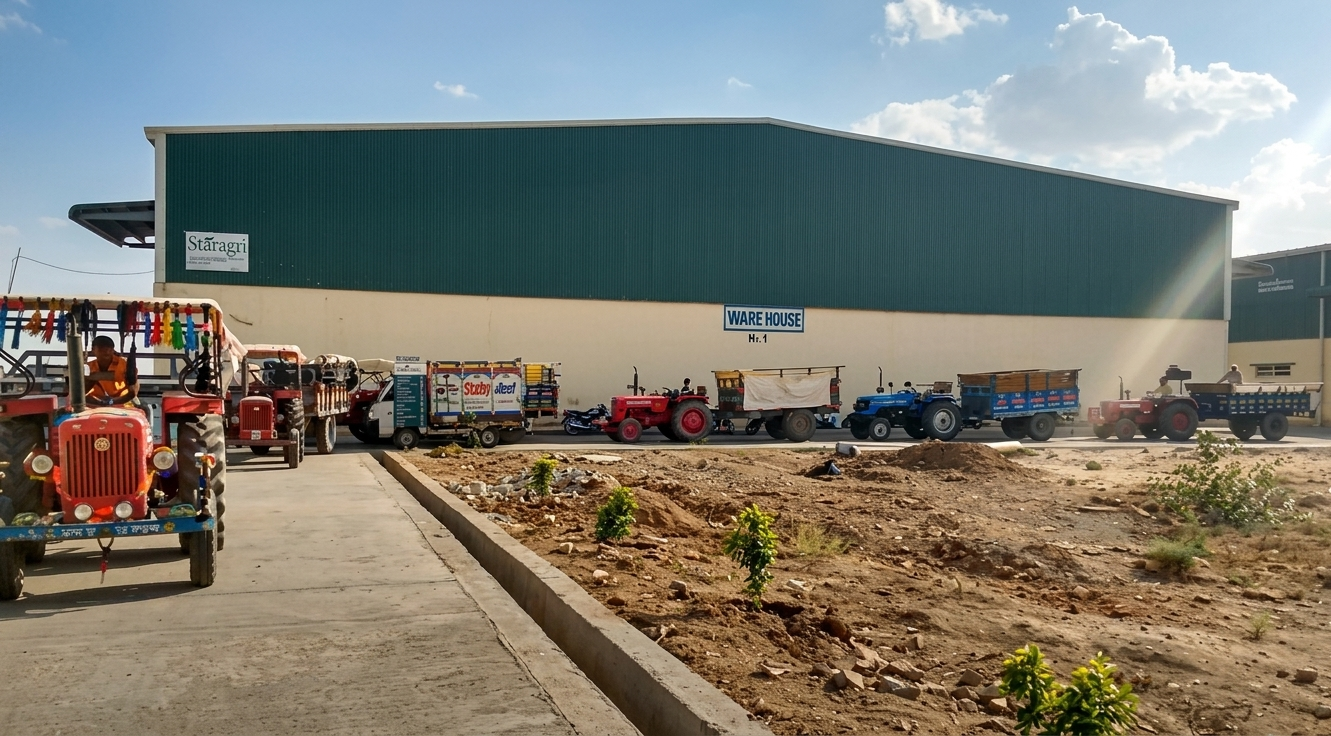
Tag Archives: warehousing

India’s agri supply chain is one of the largest and most complex in the world. From farm gates in rural hinterlands to consumption centres across cities, commodities pass through multiple layers of storage, financing, and logistics before reaching the end market.

At the same time, the sector itself is expanding rapidly. India’s agriculture market was valued at approximately USD 479.6 billion in 2025 and is projected to grow steadily in the coming years. As production scales, the pressure on supply chains to become more efficient, transparent, and resilient is also increasing.

This is where structured, technology-enabled agri supply chain management becomes critical and where players like StarAgri are creating impact.

Understanding the Agricultural Supply Chain in India

At its core, the agri supply chain involves:

  • Harvesting at the farm level
  • Aggregation and transportation
  • Storage in warehouses or silos
  • Financing against stored commodities
  • Distribution to processors, traders, or markets

Each of these stages carries risks like quality deterioration, price fluctuations, pilferage, and lack of transparency. Traditionally, the system has been fragmented. But today, there is a visible shift toward integrated and organised supply chains, supported by infrastructure and technology.
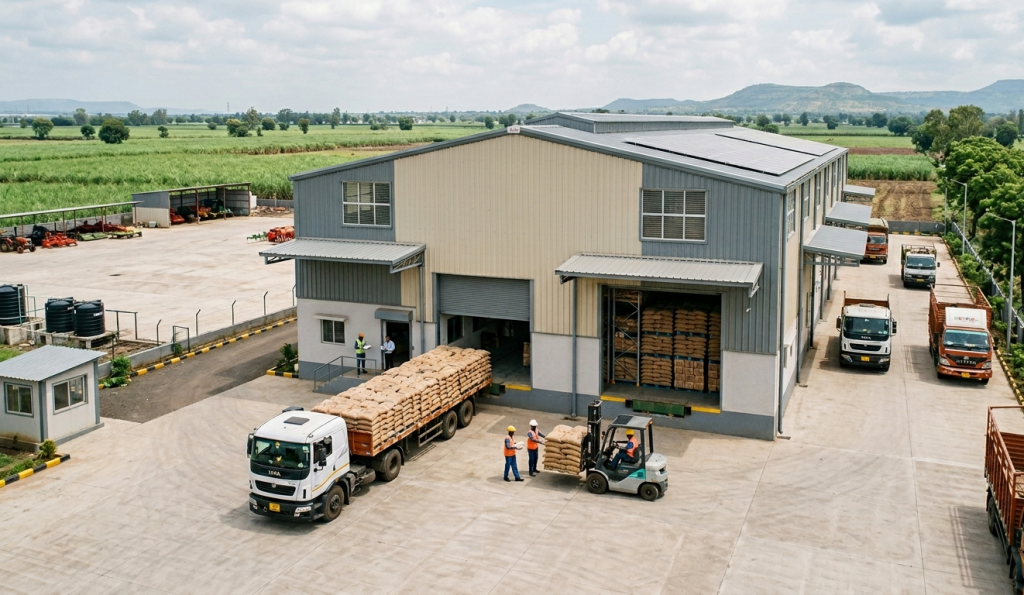
agri supply chain

The Backbone: Warehousing Infrastructure

Warehousing plays a foundational role in stabilising the agri supply chain. With increasing production and demand, the need for scientific storage infrastructure has never been greater. Efficient warehousing helps:

  • Reduce post-harvest losses
  • Maintain quality standards
  • Enable farmers and traders to store and sell at optimal prices
  • Improve overall supply chain efficiency

“With the foodgrain warehousing storage market projected to expand from ₹37,336 crore in 2025-26 to ₹43,953 crore by 2030-31, India is poised for a multi-crore opportunity driven by PPP silos, buffer stock needs, and leading private players.”

Collateral Management: Unlocking Liquidity

Storage alone is not enough. What truly enhances value is the ability to unlock financing against stored commodities. This is where collateral management becomes essential.

Under this system:

  • Commodities stored in warehouses are monitored and verified
  • Quality and quantity are assessed
  • Warehouse receipts are issued
  • Financial institutions provide loans against these receipts

This structured approach helps address India’s large agricultural credit gap while ensuring risk-controlled lending. Key benefits include:

  • Immediate liquidity without distress selling
  • Reduced credit risk for lenders
  • Greater trust across the value chain

The Role of Technology in Modern Supply Chains

Technology is rapidly transforming how agri supply chain operates & the innovations include:

  • IoT-based warehouse monitoring → Real-time tracking of temperature, humidity, and conditions
  • Digital inventory systems → Accurate stock visibility and traceability
  • Data analytics and risk tools → Better lending and trading decisions
  • Integrated digital ecosystems → Connecting storage, finance, and marketplaces

While there is no exact data on the extent of technology penetration in the Indian agricultural warehousing sector, tech integration is growing rapidly to reduce post-harvest losses, which are currently valued at approximately ₹1.5 lakh crore annually.
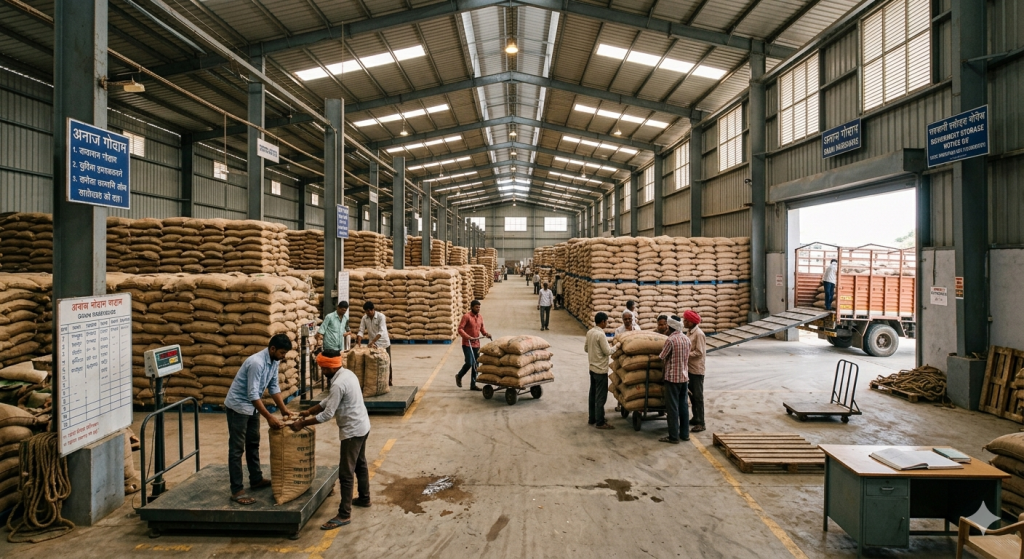
agriculture supply chain

Building Resilient and Efficient Supply Chains

A strong agricultural supply chain is about resilience and reliability. With increasing climate variability and market volatility, supply chains must be able to:

  • Adapt quickly to disruptions
  • Maintain quality and compliance
  • Ensure seamless commodity flow
  • Provide real-time visibility

Technology-enabled systems are helping transform traditional supply chains into predictable and efficient networks.

StarAgri’s Role in Strengthening Agri Supply Chains

StarAgri has been at the forefront of building structured, technology-driven agricultural supply chain solutions in India. Its integrated approach includes:

  • Extensive warehousing network → Scientific storage infrastructure across key agri regions
  • Collateral management services → End-to-end monitoring, quality control, and compliance
  • Technology integration → Digital inventory tracking, audit systems, and reporting tools
  • Ecosystem connectivity → Seamless integration with platforms like Agribazaar and financing through Agriwise

By combining infrastructure with technology, StarAgri enables:

Safer storage, smarter financing, and more efficient trade flows.

The Way Forward

India’s agricultural future depends not just on higher production, but on how efficiently that produce moves through the system. As the sector continues to evolve, the focus will increasingly shift toward:

  • Digitised supply chains
  • Integrated infrastructure ecosystems
  • Data-driven decision-making

Strong supply chains will play a defining role in ensuring that agricultural growth translates into higher farmer incomes and a more resilient economy.

FAQs

  • What is agricultural supply chain management?
    Agricultural supply chain management involves the end-to-end movement of produce, from farms to markets, covering storage, transportation, financing, and distribution.
  • Why is warehousing important in agriculture?
    Warehousing helps reduce post-harvest losses, maintains crop quality, and allows farmers and traders to store produce and sell when market prices are favourable.
  • What is collateral management in agriculture?
    Collateral management is a system where stored commodities are monitored and used as security for loans, enabling farmers and businesses to access working capital.
  • How is technology improving agricultural supply chains?
    Technology enables real-time inventory tracking, quality monitoring, risk assessment, and better coordination across storage, finance, and trading activities.
  • How does StarAgri support agri supply chains?
    StarAgri provides integrated solutions, including warehousing, collateral management, and technology-driven systems that improve efficiency, transparency, and access to finance.

Disclaimer

The content published on this blog is provided solely for informational and educational purposes and is not intended as professional or legal advice. While we strive to ensure the accuracy and reliability of the information presented, StarAgri make no representations or warranties of any kind, express or implied, about the completeness, accuracy, suitability, or availability with respect to the blog content or the information, products, services, or related graphics contained in the blog for any purpose. Any reliance you place on such information is therefore strictly at your own risk. Readers are encouraged to consult qualified agricultural experts, agronomists, or relevant professionals before making any decisions based on the information provided herein. StarAgri, its authors, contributors, and affiliates shall not be held liable for any loss or damage, including without limitation, indirect or consequential loss or damage, or any loss or damage whatsoever arising from reliance on information contained in this blog. Through this blog, you may be able to link to other websites that are not under the control of StarAgri. We have no control over the nature, content, and availability of those sites and inclusion of any links does not necessarily imply a recommendation or endorsement of the views expressed within them. We reserve the right to modify, update, or remove blog content at any time without prior notice.

What happens to a crop after it leaves the farm? It’s a simple question, but one that defines the efficiency, profitability, and sustainability of India’s entire agricultural ecosystem.
Because growing food is only half the story. Moving it, storing it, preserving its quality, and financing it, that’s where the real complexity begins.

And increasingly, that complexity is being solved by technology.

The Invisible Backbone of Agriculture

India’s total food grain production has reached record levels, with the 2024-25 agricultural year estimated at over 3,540 lakh tonnes (354 million tonnes), highlighting a consistent upward trend. Despite this scale, inefficiencies in logistics and storage continue to cause significant losses.

India loses approximately 22% of its food grain output annually, amounting to around 74 Million Tonnes. These post-harvest losses (PHL) are largely due to inadequate storage, logistics, and handling, amounting to an economic loss of ₹1.53 trillion (USD 18.5 billion) annually.

So the question is: where does it all go wrong?

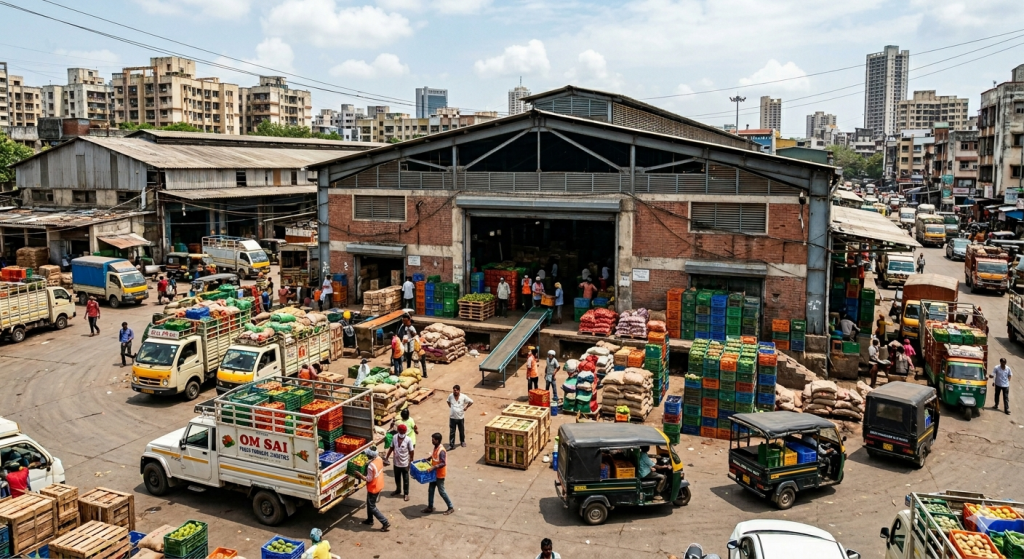
A large part of the challenge lies in fragmented supply chains, inadequate storage infrastructure, and limited visibility across the movement of goods. This is where logistics and warehousing become critical not just as support functions, but as the backbone of agricultural supply chains.

warehouse india

From Traditional Warehouses to Smart Infrastructure

For decades, warehousing in agriculture has been largely static, focused on physical storage with limited technological intervention. But today, that’s changing rapidly.
Modern warehouses are evolving into data-driven, tech-enabled hubs that do far more than just store commodities. They are becoming centres for:

  • Real-time inventory tracking
  • Quality monitoring
  • Risk management
  • Integrated financing

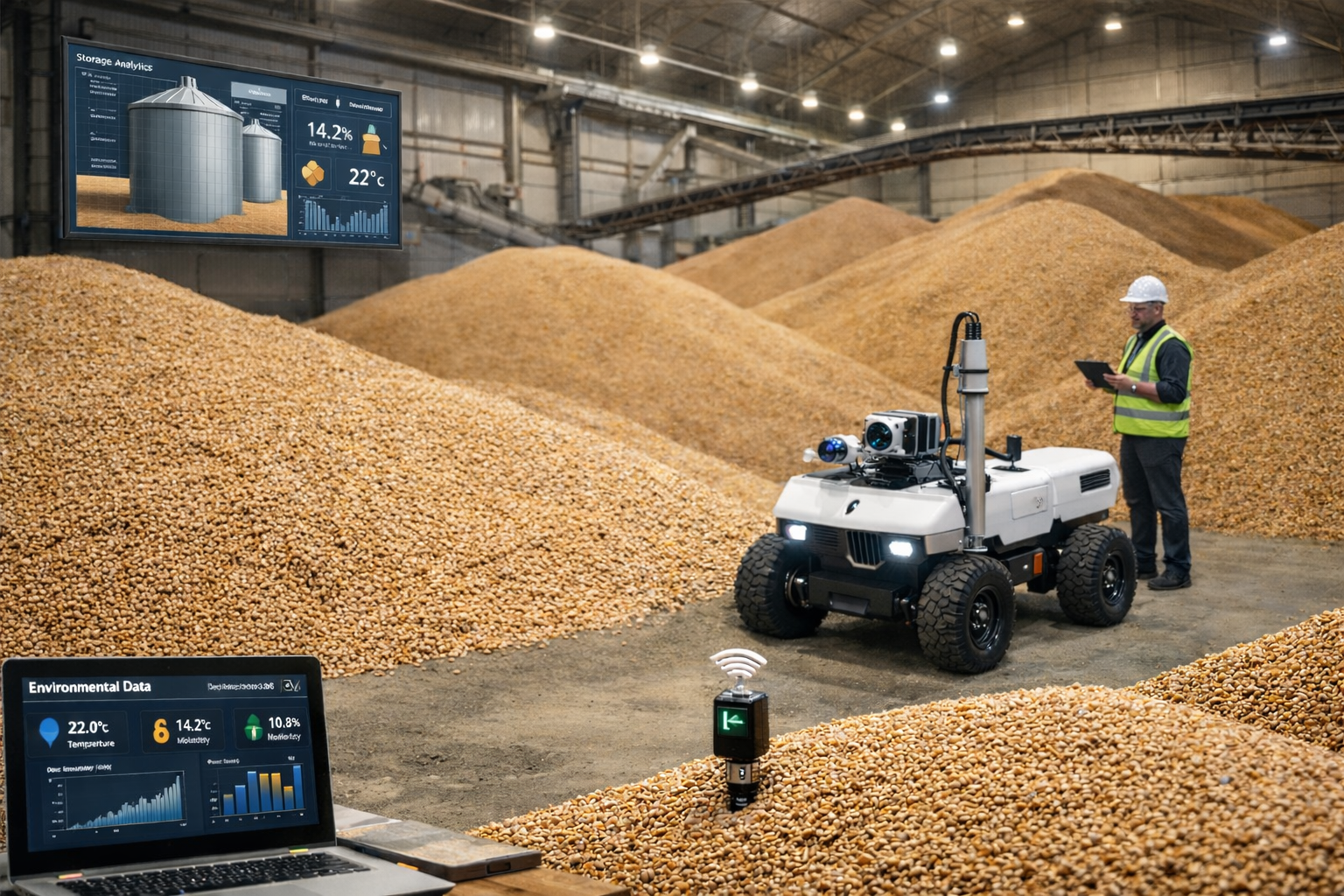
Technologies such as IoT sensors, digital inventory systems, and data analytics are enabling stakeholders to monitor stock levels, reduce spoilage, and optimise storage utilisation, redefining how agricultural commodities are managed.

Why Technology Matters More Than Ever

Agriculture operates under constant uncertainty: weather fluctuations, price volatility, and demand-supply mismatches. In such an environment, visibility and control become critical.
Technology brings both.

  • Real-Time Tracking: Stakeholders can track inventory movement and availability across locations
  • Quality Assurance: Sensors and monitoring tools help maintain storage conditions
  • Data Integration: Seamless flow of information between farmers, warehouses, traders, and financiers
  • Operational Efficiency: Reduced manual processes and faster decision-making

The global smart warehousing market size is projected to reach USD 40.5 billion by 2028, at a CAGR of 14.6% during the forecast period. India’s agri sector is now catching up, fast.

warehouse technology

StarAgri: Enabling Tech-Driven Agri Infrastructure & Beyond

StarAgri has been playing a key role in building and managing agricultural supply chain infrastructure across India. But what sets it apart is its focus on integrating technology into traditional warehousing and logistics systems. Instead of viewing warehousing as just storage, StarAgri approaches it as a platform for efficiency, transparency, and financial enablement.

If warehousing is the foundation, technology is what connects and elevates the entire system.

At StarAgri, the focus goes beyond storage to build an integrated, tech-enabled ecosystem that supports commodities across their lifecycle.

  • Collateral Management: Through standardised processes, digital documentation, and real-time monitoring, StarAgri ensures that stored commodities are secure and finance-ready. This reduces risk and builds confidence for lenders and borrowers alike.
  • Star Labs: With scientific testing and standardised grading, Star Labs brings consistency and transparency to commodity quality, ensuring that what’s stored is accurately assessed and trusted.
  • Procurement: Tech-enabled procurement systems help connect farmers to markets more efficiently, improving traceability, price discovery, and supply reliability.
  • Logistics: Integrated logistics ensures smooth transportation across the supply chain, reducing delays, minimising losses, and improving operational efficiency.
  • Digital Integration: From storage to finance, every layer is digitally connected, enabling real-time visibility, better decision-making, and a more transparent ecosystem.

Building the Future of Agri Supply Chains

As India continues to modernise its agricultural ecosystem, the role of logistics and warehousing will only become more critical. As the future will be built on infrastructure, it will also be built on intelligent infrastructure.

  • Warehouses will not just store goods; they will generate data.
  • Logistics networks will not just move commodities; they will enable visibility.
  • And supply chains will not just connect stakeholders; they will empower them.

So, what happens to a crop after it leaves the farm? Increasingly, it enters a system that is becoming smarter, faster, and more connected.

With technology at its core, organisations like StarAgri are helping transform India’s agri logistics and warehousing ecosystem, turning traditional infrastructure into engines of efficiency and growth.

In modern agriculture, where success is about how much you produce, it is also about how well you manage everything that comes after.

FAQs

  • What role does logistics play in India’s agricultural supply chain?
    Logistics is critical in ensuring that agricultural produce moves efficiently from farms to markets. It directly impacts quality, pricing, and availability, making it a key factor in reducing post-harvest losses and improving supply chain efficiency.
  • How is technology transforming agri warehousing in India?
    Technology enables real-time inventory tracking, quality monitoring, and data-driven decision-making. Modern warehouses are evolving into smart infrastructure that improves transparency, reduces losses, and enhances operational efficiency.
  • What services does StarAgri offer beyond warehousing?
    StarAgri offers a comprehensive ecosystem including collateral management, quality testing through Star Labs, procurement services, and integrated logistics, creating a seamless agri supply chain solution.
  • What is collateral management and why is it important?
    Collateral management ensures that stored commodities are securely monitored, quality-verified, and documented, making them eligible for financing. It builds trust between borrowers and lenders while reducing credit risk.
  • How does StarAgri support farmers and agri businesses?
    By integrating infrastructure, technology, and finance (through agribazaar and Agriwise), StarAgri enables better storage, efficient market access, and easier access to credit, supporting stakeholders across the value chain.

Disclaimer

The content published on this blog is provided solely for informational and educational purposes and is not intended as professional or legal advice. While we strive to ensure the accuracy and reliability of the information presented, StarAgri make no representations or warranties of any kind, express or implied, about the completeness, accuracy, suitability, or availability with respect to the blog content or the information, products, services, or related graphics contained in the blog for any purpose. Any reliance you place on such information is therefore strictly at your own risk. Readers are encouraged to consult qualified agricultural experts, agronomists, or relevant professionals before making any decisions based on the information provided herein. StarAgri, its authors, contributors, and affiliates shall not be held liable for any loss or damage, including without limitation, indirect or consequential loss or damage, or any loss or damage whatsoever arising from reliance on information contained in this blog. Through this blog, you may be able to link to other websites that are not under the control of StarAgri. We have no control over the nature, content, and availability of those sites and inclusion of any links does not necessarily imply a recommendation or endorsement of the views expressed within them. We reserve the right to modify, update, or remove blog content at any time without prior notice.