Tag Archives: agri value chain

Today, effectively handling agricultural produce after harvest is just as important as growing it. That’s where commodity management takes centre stage, ensuring that what farmers produce is stored safely, valued precisely, financed efficiently, and connected to markets transparently. For organisations like StarAgri, this isn’t merely a service: it’s a strategic mission that supports farmers, traders, lenders, and agribusinesses across the value chain.

“According to the PHDCCI report, the foodgrain warehousing storage market is projected to grow from ₹37,336 crore in 2025-26 to ₹43,953 crore by 2030-31, driven by rising procurement needs, expanding PPP silo projects, and an active private warehousing industry.”

The next decade will witness major adoption of high-end technologies such as IoT-enabled climate monitoring, automated grain quality labs, blockchain-based traceability systems, and digital twins for predictive maintenance. These advancements will be critical to building a resilient, efficient agri-logistics backbone for India’s “Viksit Bharat @ 2047” vision.

The idea of commodity management goes beyond simple storage to include quality assurance, financing support, inventory monitoring, digitised market linkages, and deep data insights, all integrated to maximise value and minimise risk. In this article, we explore why commodity management matters, how StarAgri delivers it, and why it’s increasingly critical for modern agriculture.
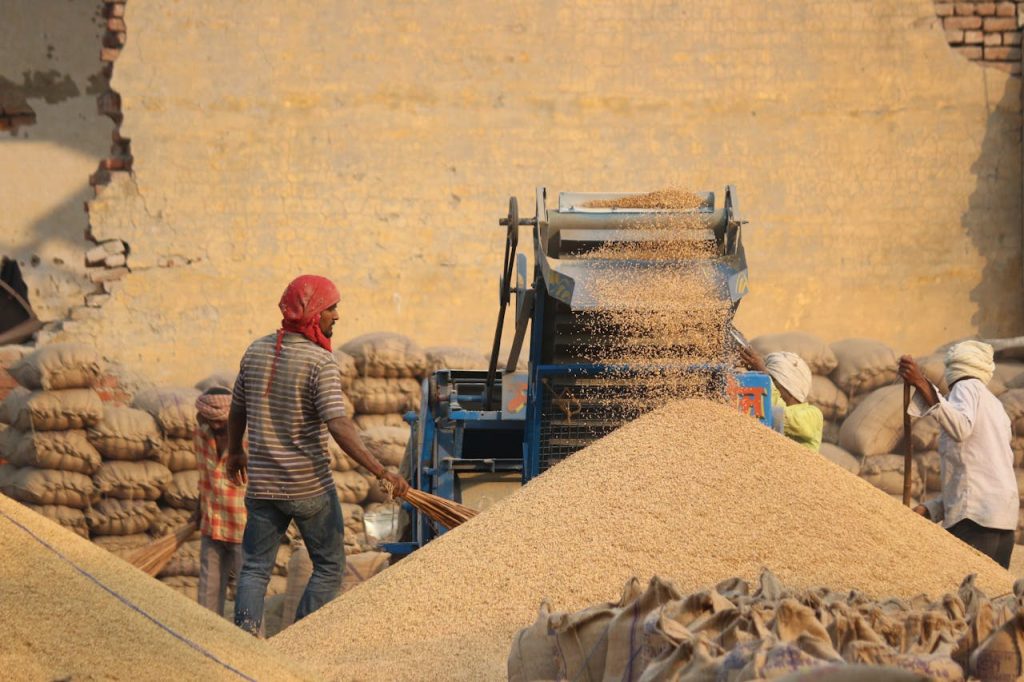
What is commodity management in agriculture?

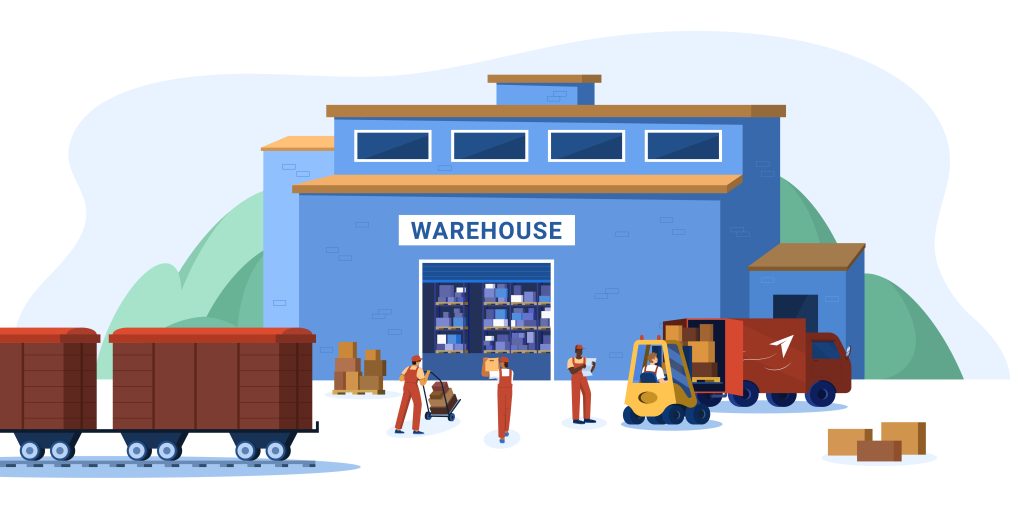
Commodity management refers to a set of services that help agricultural produce move from farm storage to market sale in the most efficient, secure, and value-accretive way possible. It covers physical storage, quality control, documentation, financing, and trade facilitation, orchestrating all elements that drive value realisation for stored agricultural commodities.

In India, this role has gained prominence due to persistent post-harvest losses and fragmented storage systems. A robust commodity management system can help reduce waste, improve market access, and unlock financial opportunities tied to stored produce.

Why commodity management isn’t just storage

Traditionally, warehousing was often limited to storing goods until they were sold. But modern commodity management services are far more strategic:

  • They ensure quality and quantity assurance, helping stakeholders trust stored inventory.
  • They enable collateral-linked financing, unlocking liquidity against stored produce.
  • They provide market and data insights, equipping farmers and traders with price trends and risk indicators.
  • They integrate technology and transparency for buyers, lenders, and storage operators.

With India’s warehousing industry projected to reach nearly USD 35 billion by 2027, propelled by digital adoption and modern logistics infrastructure, tech-enabled commodity management is becoming a critical differentiator across the value chain. (StarAgri)
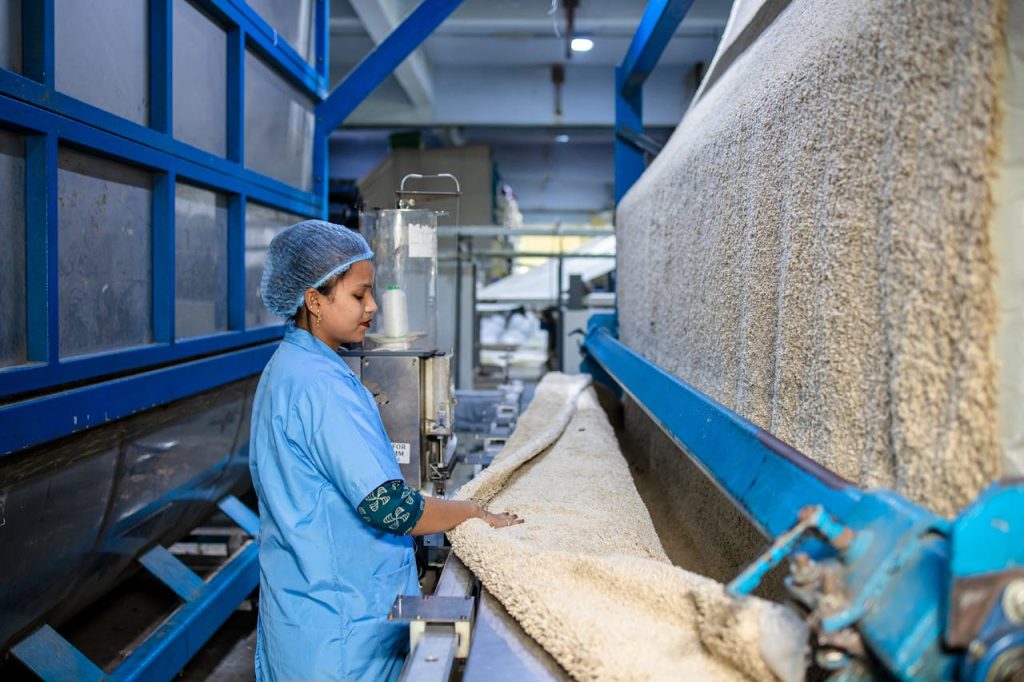
How StarAgri’s commodity management services stand out

StarAgri began in 2006, focused on agri-warehousing and collateral management, and has since expanded into one of India’s most trusted integrated agri-services platforms. It now operates a pan-India network of over 2,200 scientific warehouses, with a total capacity of more than 5MMT, serving farmers, traders, processors, and institutional clients alike. (StarAgri)

Here’s how StarAgri’s commodity management services help agriculture stakeholders:

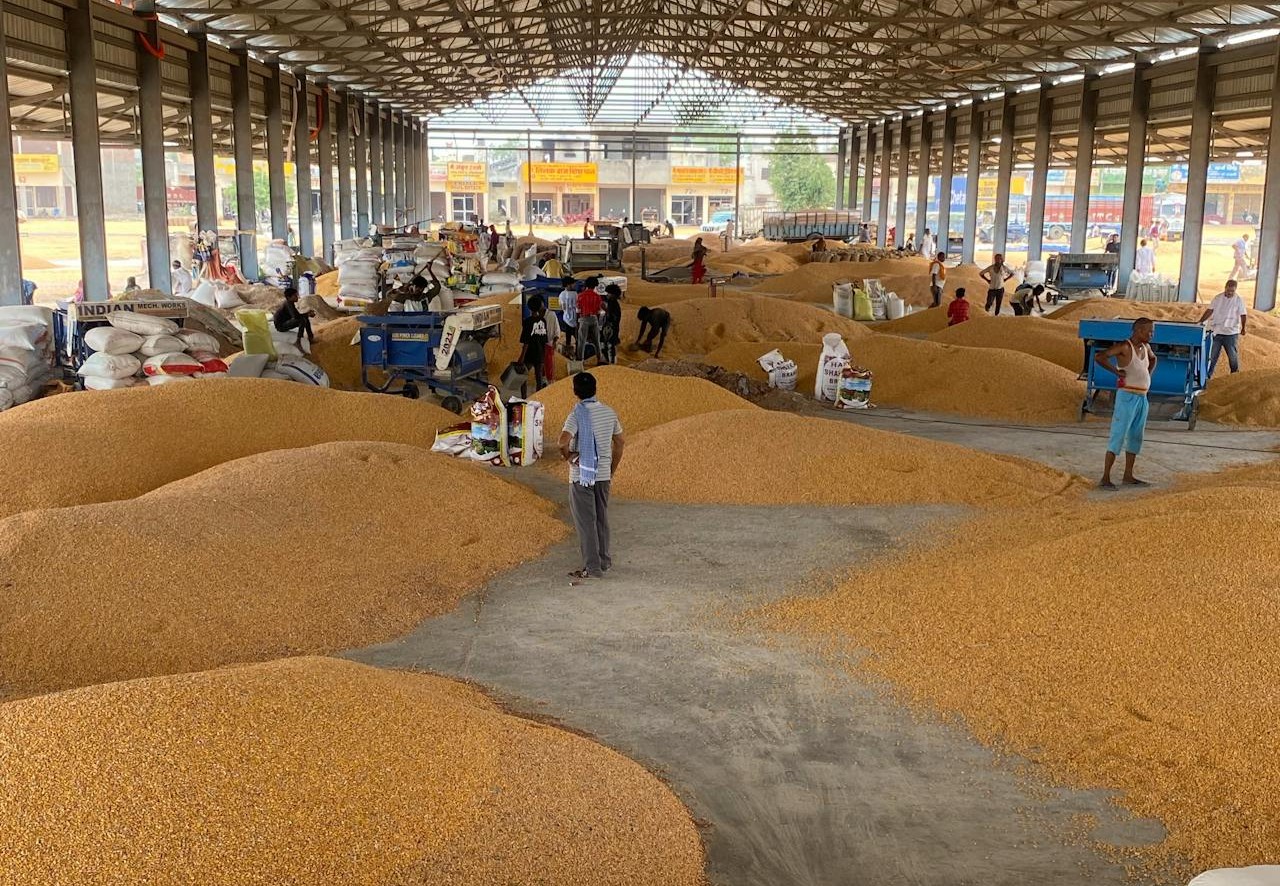
  • Scientific Warehousing & Storage: Before any agricultural commodity enters a warehouse, it undergoes quality and quantity testing. StarAgri’s facilities maintain pest-controlled environments, fumigation processes, and advanced inventory tracking, safeguarding produce and maintaining integrity throughout storage. (StarAgri)
  • Collateral Management: Stored commodities can become powerful financial assets. By partnering with over 24 leading banks and financial institutions, StarAgri enables institutions to extend credit against warehouse-receipted commodities, backed by systematic verification and documentation. This helps farmers and traders access financing without distress sales. (StarAgri)
  • Agri Financing solutions: Beyond warehouse receipt financing, StarAgri’s integrated services, through subsidiaries like Agriwise Finserv, help stakeholders unlock liquidity at competitive rates. The goal is to ensure more stakeholders have access to structured credit linked to real, quality-verified inventory. (StarAgri)
  • Market insights & Data-driven support: Commodity management today also means leveraging data. Through digital tools and platforms such as Agribazaar, stakeholders receive actionable insights on price movements, demand-supply dynamics, quality trends, and market outlooks, enabling smarter decisions across storage, finance, and trade. (StarAgri)
  • Technology-enabled transparency: With advanced tracking systems, IoT monitoring, and digital platforms, StarAgri ensures visibility into inventory conditions and transaction history, creating greater trust among lenders, buyers, and sellers.

Real-world impact and industry validation

StarAgri’s growth trajectory underpins the increasing relevance of structured commodity management. In FY25, the company reported 55% revenue growth, with cumulative warehouse receipt-backed financing of ₹1.5 lakh crore and credit disbursements of ₹9,000 crore. Its utilisation across warehousing infrastructure continues to expand alongside digital adoption. These figures underscore that commodity management services are not niche offerings; they are foundational to modern agricultural finance and trade. As more stakeholders expect liquidity, quality assurance, and seamless trade pathways, structured services like those offered by StarAgri become indispensable.
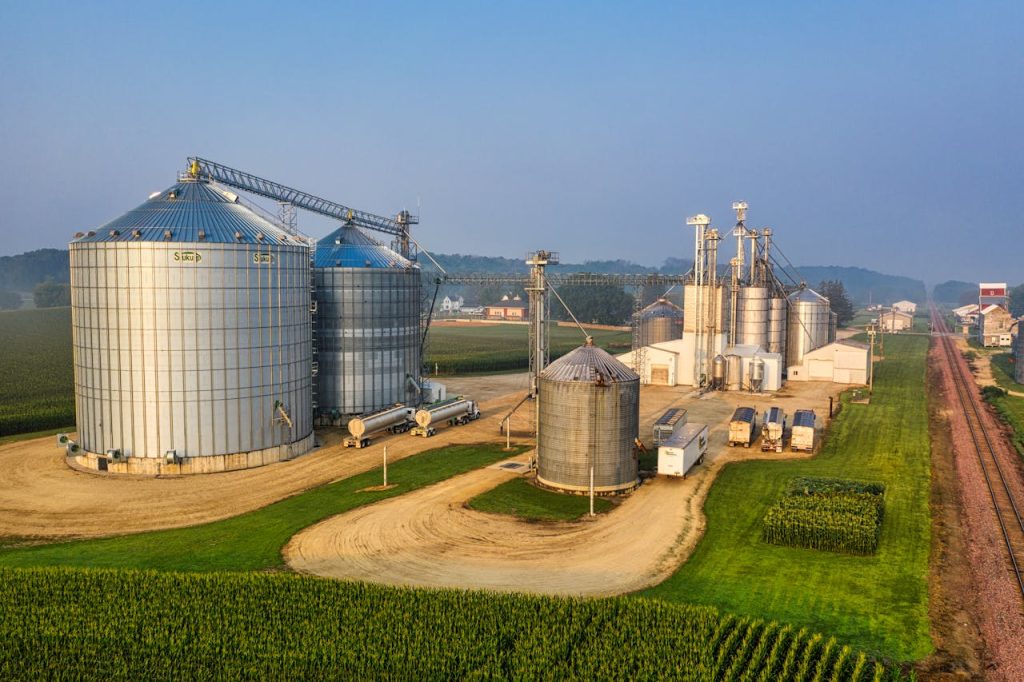
The future of commodity management

As agriculture markets evolve, commodity management will continue to expand in both scope and sophistication:

  • Digital marketplaces will connect surplus inventory with demand more efficiently.
  • Tech-driven analytics will help predict quality changes, demand surges, and pricing anomalies.
  • AI and IoT innovations will elevate how inventory is monitored and valued in real time.

For StarAgri, the ambition is to enable comprehensive, transparent, and accessible commodity management solutions that help agricultural stakeholders thrive, whether markets are stable or volatile.

Conclusion

Commodity management is more than storage. It’s a value-creation engine that turns harvested crops into economic opportunities. In an era where markets move fast and stakeholders need liquidity and insight, structured and tech-enabled services are no longer optional.
With its integrated approach to warehousing, financing, quality assurance, and market insights, StarAgri is helping redefine what commodity management means for Indian agriculture, transforming stored harvests into empowered decisions and profitable outcomes. By making commodity management accessible, reliable, and transparent, companies like StarAgri are shaping the way agricultural value is preserved and realised in 2025–26 and beyond.

FAQs

  • What are commodity management services in agriculture?
    Commodity management services include scientific storage, quality assurance, collateral management, financing support, and market insights that help agricultural produce retain value from harvest to sale.
  • How is commodity management different from traditional warehousing?
    While traditional warehousing focuses only on storage, commodity management integrates storage with quality control, financing, documentation, risk management, and market intelligence to maximise value and reduce losses.
  • Why is commodity management important for farmers and traders?
    It enables stakeholders to avoid distress sales, access warehouse-linked finance, monitor quality, and make informed selling decisions based on market trends and price movements.
  • How does technology improve commodity management services?
    Digital inventory tracking, IoT monitoring, and data analytics enhance transparency, reduce operational risks, and provide real-time visibility into stored commodities.
  • How does StarAgri support commodity management?
    StarAgri provides integrated services, including scientific warehousing, collateral management, agri-finance solutions, and market insights, creating a structured ecosystem that strengthens agricultural trade and liquidity.

Disclaimer

The content published on this blog is provided solely for informational and educational purposes and is not intended as professional or legal advice. While we strive to ensure the accuracy and reliability of the information presented, StarAgri make no representations or warranties of any kind, express or implied, about the completeness, accuracy, suitability, or availability with respect to the blog content or the information, products, services, or related graphics contained in the blog for any purpose. Any reliance you place on such information is therefore strictly at your own risk. Readers are encouraged to consult qualified agricultural experts, agronomists, or relevant professionals before making any decisions based on the information provided herein. StarAgri, its authors, contributors, and affiliates shall not be held liable for any loss or damage, including without limitation, indirect or consequential loss or damage, or any loss or damage whatsoever arising from reliance on information contained in this blog. Through this blog, you may be able to link to other websites that are not under the control of StarAgri. We have no control over the nature, content, and availability of those sites and inclusion of any links does not necessarily imply a recommendation or endorsement of the views expressed within them. We reserve the right to modify, update, or remove blog content at any time without prior notice.
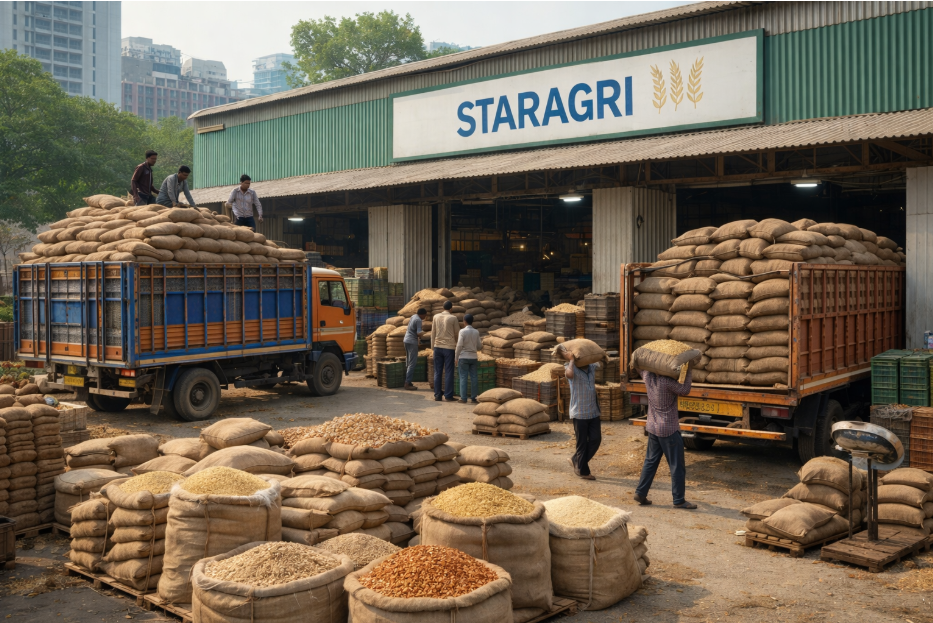
Agriculture doesn’t stop at harvest. It’s where the movement begins.

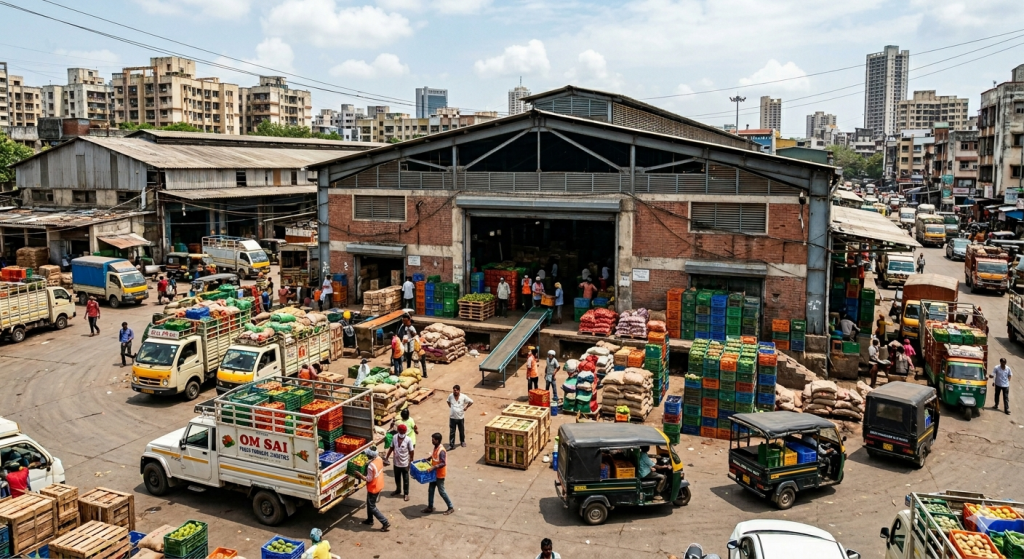
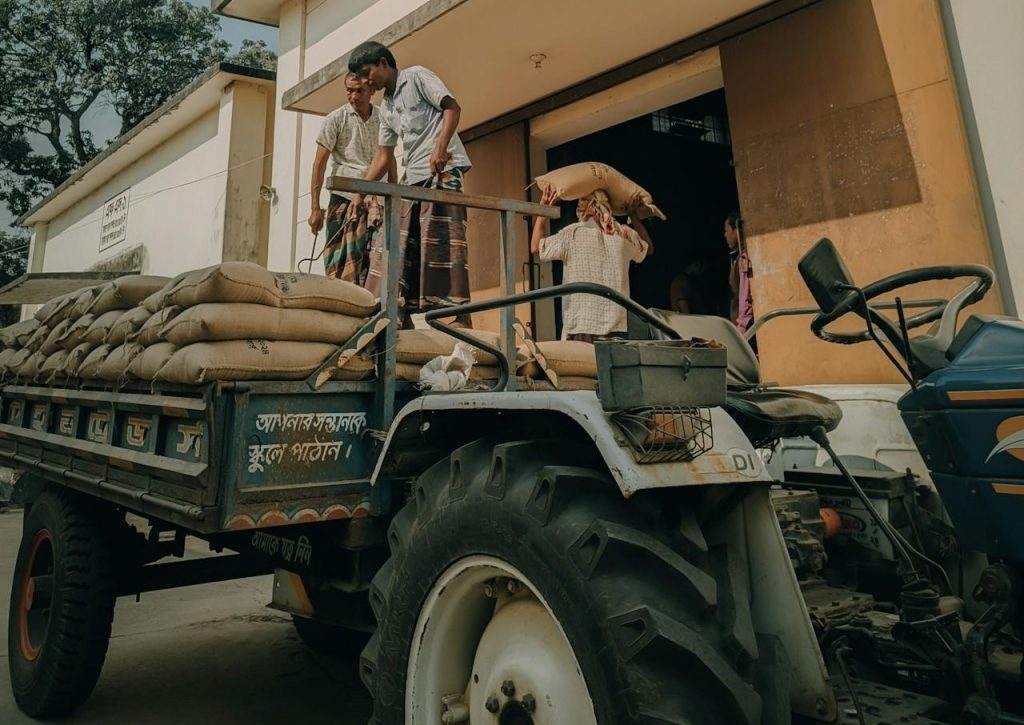
Once commodities leave the farm, they travel through storage, financing, logistics, and markets before reaching end users. Efficiently managing this journey is what makes modern agriculture work. That’s where supply chain management plays a defining role.
Today, as agricultural trade becomes faster, more digital, and more integrated, strong supply chain management is a mandate. It is becoming a strategic advantage for farmers, traders, lenders, and agribusinesses alike.

What is agriculture supply chain management?

In simple terms, agriculture supply chain management refers to the coordinated handling of commodities from the farm to the final buyer. It involves storage, quality control, logistics, financing, and market linkages working together in sync.
Globally, the agriculture supply chain management market is estimated at about USD 1.1 billion in 2025 and is projected to cross USD 1.2 billion in 2026, reflecting the growing need for visibility, efficiency, and traceability across agri-value chains. As agricultural markets become more connected, the importance of integrated systems continues to rise.
In India, this need is even more pronounced. With large production volumes across grains, pulses, and oilseeds, and with consumption and exports expanding, the ability to move commodities smoothly has become central to agricultural growth.

Supply chain management is gaining importance in 2025–26

Warehousing capacity in India has expanded significantly, and cold chain infrastructure now exceeds 40 Million Metric Tonnes nationwide. At the same time, agricultural credit is expected to surpass ₹32 lakh Crore by FY26, underscoring the growing linkages among storage, trade, and finance.
These numbers reflect a broader shift. Efficient supply chain management helps reduce post-harvest losses, improve price discovery, and ensure commodities reach markets on time and in the right condition.
For agribusinesses, this also means better inventory visibility, stronger risk management, and more predictable cash flows. For farmers, it can translate into improved market access and timely payments. For lenders, it enables more secure and structured financing.

From fragmented systems to integrated networks

Traditionally, agricultural supply chains in India were fragmented, with multiple intermediaries and limited transparency. Today, technology and organised infrastructure are changing that narrative. Digital platforms, quality-assured warehousing, and integrated logistics are improving efficiency in commodity movement.
Modern supply chain management is about creating connected ecosystems where storage, finance, and market linkages operate together. This integrated approach helps reduce inefficiencies, strengthen trust among stakeholders, and unlock more value across the chain.


Where StarAgri fits into the picture

At StarAgri, agriculture supply chains are viewed as interconnected systems that require reliability, transparency, and strong operational support. The company’s services are designed to strengthen different points across the agri-value chain.

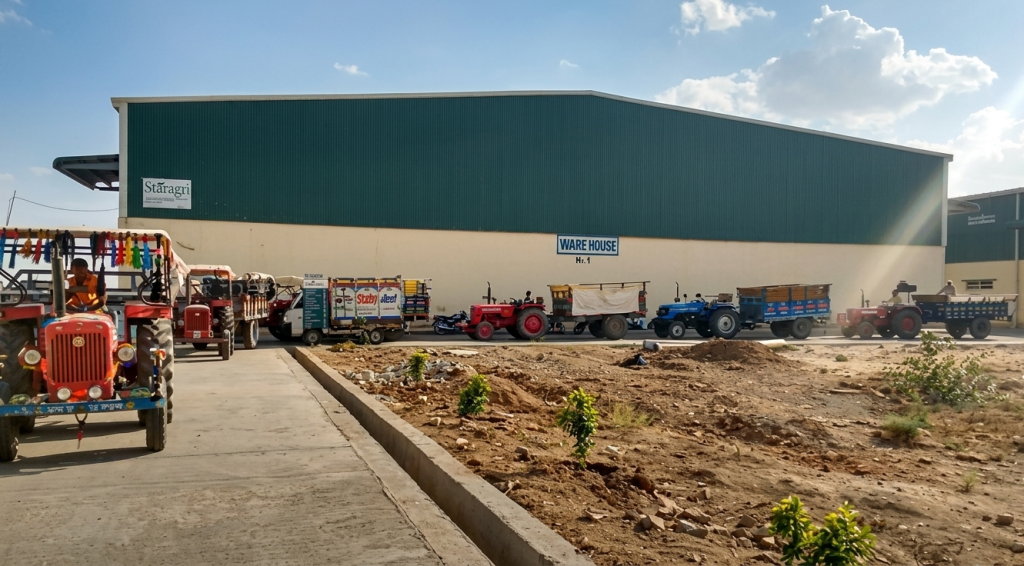
  • Warehousing & storage infrastructure: StarAgri operates and manages a network of 2200+ warehouses across 380+ key locations in 19 states, enabling safe, quality-assured storage of commodities.
  • Collateral management services: Through structured inventory monitoring and risk controls, StarAgri supports lenders and traders with secure collateral management for stored goods.
  • Agri financing solutions: By enabling warehouse-linked and trade-linked finance, StarAgri improves liquidity across the agricultural ecosystem through Agriwise Finserv, supporting farmers, traders, and processors.
  • Integrated tech platform: Technology-led solutions on agribazaar provide visibility into yield & acreage prediction, commodity trading, and maintaining the quality of the stock through NABL- certified StarLabs.
  • Market insights & trends: By analysing price movements, demand–supply dynamics, and crop outlooks, StarAgri offers actionable market insights that help stakeholders take informed decisions across storage, financing, and trade.

Technology is reshaping supply chain management

Digital tools are playing an increasingly important role in agricultural logistics and storage. With real-time inventory tracking, quality monitoring, and analytics, technology is helping stakeholders make faster, more informed decisions. Even incremental improvements, such as better warehouse monitoring or streamlined documentation, can significantly enhance supply chain management outcomes. As data becomes more accessible, supply chains are becoming more transparent and responsive.
This evolution is particularly important as India strengthens its position in global agricultural trade and domestic demand continues to diversify.


staragri trade facilitation

Looking ahead

The next phase of agricultural growth will be shaped by how effectively commodities move through the system. Investments in storage, financing, and technology will continue to bring greater integration across the value chain.

For organisations like StarAgri, the focus remains on enabling dependable, technology-driven supply chain management that supports farmers, strengthens trade, and improves efficiency across the ecosystem. When supply chains function well, agriculture becomes more resilient, and markets become more accessible, from farm to the future.

FAQs

  1. What is agriculture supply chain management?
    Agricultural supply chain management refers to the coordinated movement of commodities from farm to market, including storage, logistics, financing, and distribution, to ensure efficiency and quality throughout the value chain.
  2. Why is supply chain management important in agriculture today?
    It helps reduce post-harvest losses, improves price discovery, enables faster market access, and supports better financing decisions for farmers, traders, and agribusinesses.
  3. How is technology changing agricultural supply chains?
    Digital tracking, smart warehousing, and data-driven insights are improving transparency, inventory visibility, and decision-making, making supply chains more efficient and reliable.
  4. What role does financing play in agri supply chains?
    Access to warehouse-linked and trade-linked finance ensures liquidity across the chain, allowing farmers and businesses to store, trade, and sell commodities at the right time.
  5. How does StarAgri support the agriculture supply chain management?
    StarAgri supports the ecosystem through warehousing, collateral management, financing solutions, and market insights that help strengthen commodity movement from production centres to end markets.

Disclaimer

The content published on this blog is provided solely for informational and educational purposes and is not intended as professional or legal advice. While we strive to ensure the accuracy and reliability of the information presented, StarAgri make no representations or warranties of any kind, express or implied, about the completeness, accuracy, suitability, or availability with respect to the blog content or the information, products, services, or related graphics contained in the blog for any purpose. Any reliance you place on such information is therefore strictly at your own risk. Readers are encouraged to consult qualified agricultural experts, agronomists, or relevant professionals before making any decisions based on the information provided herein. StarAgri, its authors, contributors, and affiliates shall not be held liable for any loss or damage, including without limitation, indirect or consequential loss or damage, or any loss or damage whatsoever arising from reliance on information contained in this blog. Through this blog, you may be able to link to other websites that are not under the control of StarAgri. We have no control over the nature, content, and availability of those sites and inclusion of any links does not necessarily imply a recommendation or endorsement of the views expressed within them. We reserve the right to modify, update, or remove blog content at any time without prior notice.



Something fundamental is shifting in India’s agricultural ecosystem, and it goes beyond incremental reforms. The Union Budget 2026–27 places a clear bet on technology as the catalyst, introducing initiatives like Bharat-VISTAAR, a multilingual AI platform aimed at delivering real-time, data-driven advisories to farmers. Alongside targeted support for high-value crops and allied sectors, the budget raises an important question:
Can technology-led policy finally unlock a more resilient, efficient agriculture supply chain for India? Let’s find out.

As India moves deeper into the mid-2020s, technology is reshaping the country’s supply chain. With close to 60% of India’s workforce dependent on agriculture, even small gains in efficiency carry national implications for food security and economic stability. Behind the scenes, digital tools are redefining how produce travels from farmgate to market, addressing long-standing challenges such as post-harvest losses, opaque price discovery, constrained access to credit, and fragmented supply networks.

“Agriculture’s Gross Value Added rose to $290 Bn in FY25, up from $277 Bn a year earlier. Exports have continued to climb as well, touching nearly $49 Bn.”

agriculture supply chain

The agri supply chain challenge: Why tech matters

Traditionally, India’s agriculture supply chain has been marked by fragmentation and inefficiencies. Inadequate storage infrastructure, uncontrolled spoilage, and dependency on intermediaries stall farmers’ ability to command fair prices. Additionally, logistics inefficiencies, which account for over 14% of GDP, compound hurdles for agri produce moving through the system.

Enter technology: a catalyst for change. Digital solutions—from IoT sensors in warehouses to AI-based demand forecasting—are enabling visibility, traceability and speed across the agri value chain. These innovations are allowing stakeholders to respond to market trends in real time rather than rely on manual records or perception-based decisions.

Key tech reshaping the agriculture supply chain

1. IoT & remote monitoring: Internet of Things (IoT) sensors deployed across warehouses, cold storage facilities, and transport vehicles enable real-time monitoring of temperature, humidity, and storage conditions. This helps reduce spoilage, preserve crop quality, and ensure compliance with quality standards, especially for perishable and export-oriented commodities.

2. Blockchain for transparency & traceability: Blockchain technology introduces end-to-end traceability by recording every transaction and movement of produce on a secure, tamper-proof ledger. This enhances trust among buyers, improves food safety compliance, and supports traceability requirements for domestic and international agri-trade.

3. AI and predictive analytics: Artificial intelligence and data analytics are being used to forecast demand, optimise inventory levels, and predict price movements. These insights allow farmers, traders, and agri-enterprises to plan sales, manage risks, and respond proactively to market volatility rather than reacting after price fluctuations occur.

agriculture value chain

4. Digital marketplaces: Digital trading platforms connect farmers, traders, processors, and institutional buyers across geographies, improving price discovery and reducing dependency on intermediaries. Integration with e-commerce platforms such as agribazaar.com enables seamless inter-state trading, faster settlements, and greater market access for farmers.

5. Farmer-centric applications: With increasing smartphone penetration in rural India, mobile-based platforms have become critical touchpoints for farmers. These applications provide real-time access to mandi prices, weather alerts, advisory services, logistics support, and financing options, empowering farmers to make informed decisions at every stage.

According to industry outlooks, over 70% of agri trading in India could be digitised by 2030, fuelling faster, more inclusive commerce.

StarAgri: Leading tech-driven agriculture supply chain transformation

StarAgri, India’s largest integrated agritech company, combines digital innovation with physical infrastructure. StarAgri delivers solutions that strengthen every link in the agriculture supply chain, from storage to trade facilitation and financing.

  • Pre-Harvest Solutions powered by AgriBhumi: StarAgri’s Pre-Harvest Solutions, enabled through AgriBhumi, provide early-stage visibility into land, crop patterns, and cultivation history using satellite data and farm geo-tagging. This pre-harvest intelligence supports risk assessment, credit enablement, and supply planning, seamlessly integrating with StarAgri’s post-harvest storage, trading, and financing services.
  • Scientific warehousing: StarAgri operates an extensive network of 2,200+ tech-enabled warehouses across India, offering scientific storage solutions that protect produce quality and extend shelf life. These facilities are equipped with IoT and remote-monitoring tools that ensure optimal conditions, resulting in lower post-harvest losses and better price realisation for farmers.

supply chain management in agriculture

  • Collateral management & financing solutions: A critical bottleneck in agriculture is the lack of timely credit. Through StarAgri’s collateral management services, stored produce can be used as collateral to unlock working capital and loans at competitive rates. This not only enhances liquidity but also empowers farmers to sell when market prices are advantageous rather than under distress.
    With ties to over 24 banks and financial institutions, StarAgri’s finance ecosystem supports agile decision-making and economic inclusion for farmers, traders, and processors.
  • Digital marketplace: agribazaar tradefloor offers transparent, seamless trade execution. Buyers and sellers interact in a digital ecosystem that streamlines contract settlement, price discovery and contract enforcement, eliminating layers of intermediaries that once ate into farmer profits.

Impact and The Road Ahead

Technology’s impact on India’s agriculture supply chain is transformative:

  • Reduced post-harvest losses through climate-aware storage and monitoring.
  • Faster finance cycles via digital collateral systems and e-warehouse receipts.
  • Greater market access for smallholder farmers through transparent digital marketplaces.
  • Improved traceability meets the demands of global buyers and export outlets.

Public initiatives, such as the Union Budget’s focus on AI-based agri advisories, further amplify private sector innovation by providing farmers with actionable decision support.

Conclusion

The future of India’s agriculture supply chain lies in technology-integrated, transparent, and efficient systems. From real-time monitoring to digital financing and seamless trade execution, technology is reshaping how agriculture functions, not just as a livelihood, but as a competitive global business. With companies like StarAgri pioneering solutions and supportive national policies, such as the Union Budget 2026’s digital push, the agriculture supply chain is poised for a sustainable, inclusive, and resilient future.

FAQs:

  • How is technology strengthening India’s agriculture supply chain?
    Technology improves visibility, efficiency, and transparency across the agriculture supply chain through tools like IoT-enabled storage, AI-driven analytics, digital marketplaces, and real-time traceability, helping reduce losses and improve price discovery.
  • What role does the Union Budget 2026 play in agri-tech adoption?
    The Union Budget 2026 reinforces technology-led agricultural growth by introducing initiatives such as Bharat-VISTAAR, a multilingual AI advisory platform, and by supporting high-value crops and allied sectors that benefit from digitised supply chains.
  • Why is supply chain efficiency critical for Indian agriculture?
    With nearly 60% of India’s workforce engaged in agriculture, supply chain inefficiencies directly affect farmers’ incomes, food availability, and economic stability. Efficient supply chains help reduce post-harvest losses, improve market access, and stabilise prices.
  • How does StarAgri use technology to improve agricultural supply chains?
    StarAgri integrates technology across scientific warehousing, digital marketplaces, collateral management, and pre-harvest solutions like AgriBhumi to provide end-to-end visibility, risk management, and financing support across the agri value chain.
  • What are pre-harvest solutions, and why are they important?
    Pre-harvest solutions use land intelligence, satellite data, and crop digitisation to assess risk and plan supply before harvest. Platforms like AgriBhumi enable better credit decisions, supply planning, and seamless integration with post-harvest storage and trade.

Disclaimer

The content published on this blog is provided solely for informational and educational purposes and is not intended as professional or legal advice. While we strive to ensure the accuracy and reliability of the information presented, StarAgri make no representations or warranties of any kind, express or implied, about the completeness, accuracy, suitability, or availability with respect to the blog content or the information, products, services, or related graphics contained in the blog for any purpose. Any reliance you place on such information is therefore strictly at your own risk. Readers are encouraged to consult qualified agricultural experts, agronomists, or relevant professionals before making any decisions based on the information provided herein. StarAgri, its authors, contributors, and affiliates shall not be held liable for any loss or damage, including without limitation, indirect or consequential loss or damage, or any loss or damage whatsoever arising from reliance on information contained in this blog. Through this blog, you may be able to link to other websites that are not under the control of StarAgri. We have no control over the nature, content, and availability of those sites and inclusion of any links does not necessarily imply a recommendation or endorsement of the views expressed within them. We reserve the right to modify, update, or remove blog content at any time without prior notice.